Joint sealing
If you are dealing with leaking cracks, joints, or pipe, cable, and other service penetrations, you have come to the right place. We carry out the sealing of all types of cracks, construction joints, temperature joints, movement joints, expansion joints, deformation joints, and shrinkage joints in buildings and civil engineering structures.
What is the difference between a joint and a crack?
A joint is a deliberate gap or separation line between different parts of a building (e.g., masonry units, bricks, panels, or concrete pours).
A construction joint is a specific type of joint designed in a particular location to separate different construction phases, such as different stages of concrete floor or wall pouring, or to separate the foundation from the above-ground structure, or one floor from another. The purpose of a construction joint is to allow different construction phases to be completed independently and to accommodate any movements or shrinkage that may occur as concrete or other building materials cure. Other movement joints are similar in nature to construction joints, differing mainly in the extent of movement they accommodate.
A crack, on the other hand, is a fracture or separation within a structure that was not anticipated in the design. Cracks can occur for various reasons, such as material shrinkage, improper concrete curing, or changes in the structure's load-bearing capacity. The size of these cracks can range from microscopic hairline cracks to large fissures, and they can be found in any part of the structure
In summary, a joint is an intentional part of the design that allows for the separation of construction phases, whereas a crack is an unplanned defect that may indicate underlying problems in the building.
What to do with leaking cracks and joints?
Certainly, not all cracks require special attention. However, there are many cracks where sealing them with either a rigid or flexible injection resin can significantly extend the lifespan of the building. With joints, it is more straightforward: if they are leaking water, they usually need to be sealed watertight.
Over our 20+ years of operation, we have learned to seal a wide variety of water leaks, both at service penetrations and in the cracks and joints of various structures. In the case of cracks, leaks can usually be eliminated by injecting a specialised resin into the crack.
When it comes to joints, experience shows that all joints accommodating movement should be made watertight from the side where the water pressure acts upon them (usually the exterior side of the structure). This is done using materials that create a flexible, watertight, and weatherproof layer over the joint, rather than inside it. This can be achieved using PVC-based tapes bonded to the joint with a specialised epoxy adhesive, or liquid plastics, which offer the advantage of extreme elasticity and a wide application temperature range (allowing installation even in sub-zero temperatures).
Our partner Primostar OÜ supplies us with the necessary waterproofing materials.
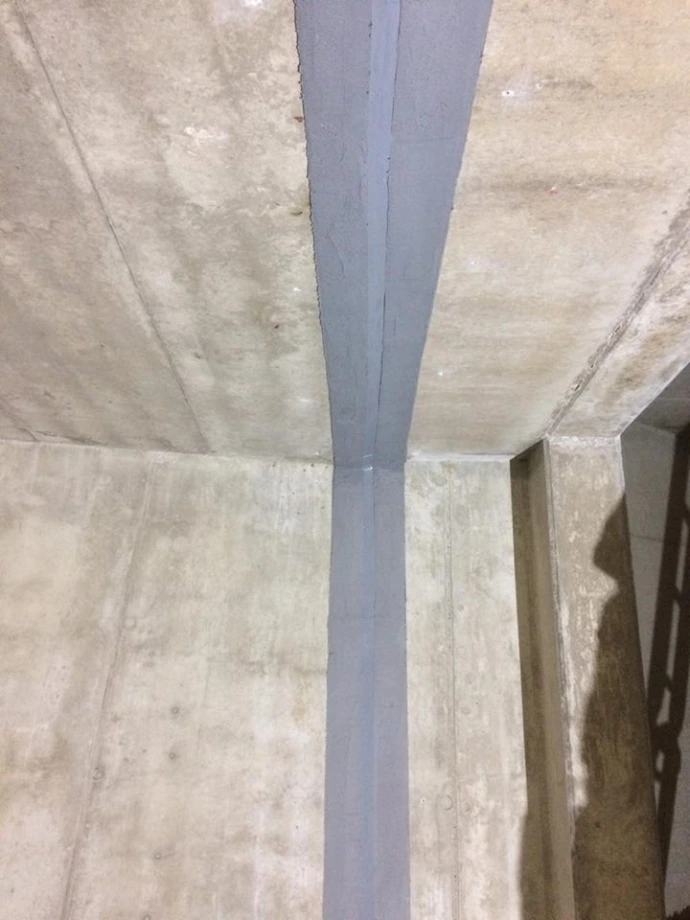
Internally sealed deformation joint
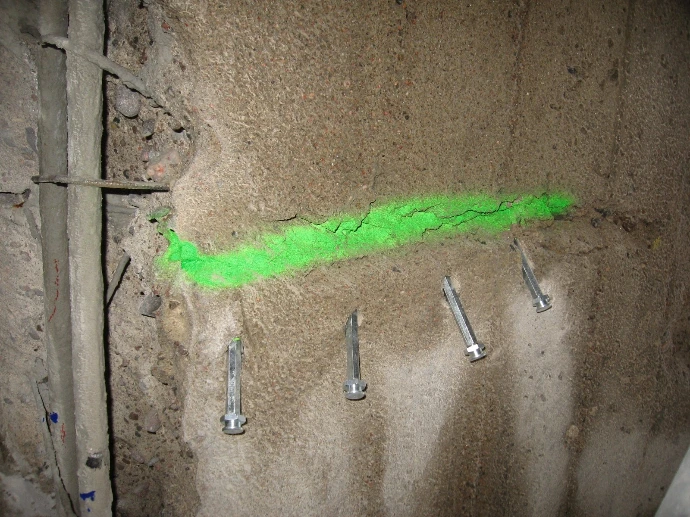
Horizontal crack in a column